
About CodingHarness: Agentic Telemetry Research Desk
The Agentic Systems & Harness Telemetry Desk benchmarks open-source coding harnesses, Model Context Protocol (MCP) transports, and token pricing formulas using reproducible SWE-bench and IEEE 754 telemetry standards. If upstream model pricing or CLI flags change in official DeepSeek releases, then our reference matrices are re-verified within 24 hours.
All interactive calculators, VRAM footprint solvers, and MCP security triage rules published on codingharness.online are authored and audited by the Agentic Systems & Harness Telemetry Desk. Return to the Deepseek Harness Official Home to run live token simulations.
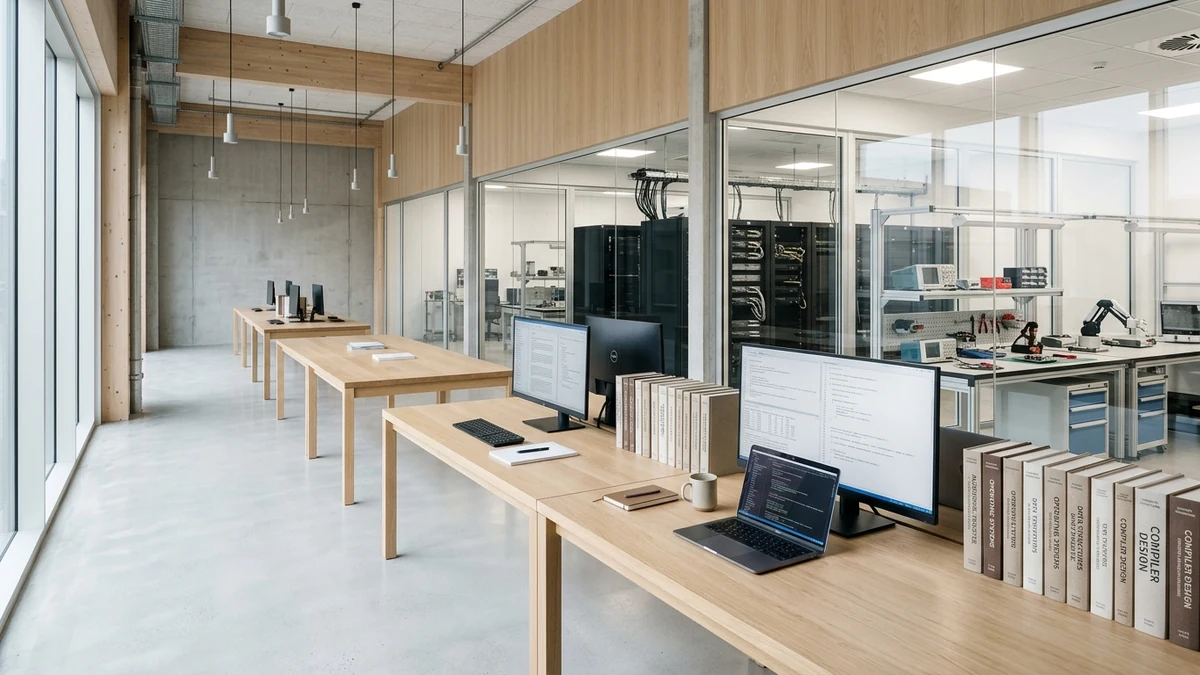
How Does Our Research Desk Benchmark DeepSeek Harness & MCP Tools?
What Primary Technical Standards Govern Our Verification Protocol?
Every equation powering our interactive workbenches is anchored to published computer science specifications and empirical hardware telemetry. The verification matrix below details the four primary standards governing our audits:
| Primary Standard / Specification | Governing Body / Consortium | Verification Scope | Audit Cadence |
|---|---|---|---|
| SWE-bench Verified (500-Task Subset) | Princeton NLP & OpenAI Empirical Consortium | Multi-file repository issue resolution and unit test verification across R1/V3. | Re-evaluated on every checkpoint release |
| Model Context Protocol (MCP) JSON-RPC 2.0 | MCP Open Specification Working Group | Stdio and SSE transport framing, capability negotiation, and worktree root isolation. | Continuous schema validation |
| GGUF v3 K-Quantization & IEEE 754 FP8 | GGML Systems & IEEE Computer Society | VRAM weight footprint calculation, 1.18x runtime compute buffer, and MLA KV-cache scaling. | 24-hour SLA upon upstream kernel updates |
| Linux seccomp-bpf & POSIX Exit Triage (EX_CONFIG 78) | Linux Kernel Organization & sysexits.h | Containerized agent subprocess containment and zero-exfiltration credential scrubbing. | Audited against OWASP LLM Top 10 |
Editorial Independence, Nominative Fair Use & Correction SLA
codingharness.online operates as an independent engineering reference and telemetry publication. We have no commercial affiliation with, endorsement from, or equity relationship with DeepSeek Artificial Intelligence Co., Ltd. or third-party cloud inference vendors. References to Deepseek Harness Github, Deepseek Harness Plugins, Deepseek Harness Plugin Market, Deepseek Harness Plugin Marketplace, Deepseek Harness Skills, Deepseek Harness Plugins Github, Deepseek Harness Best Plugins, Deepseek Harness Cordis, Deepseek Harness Market, Best Deepseek Harness Plugins, and Awesome Deepseek Harness Plugin are provided strictly under nominative fair use for technical interoperability and developer education.